


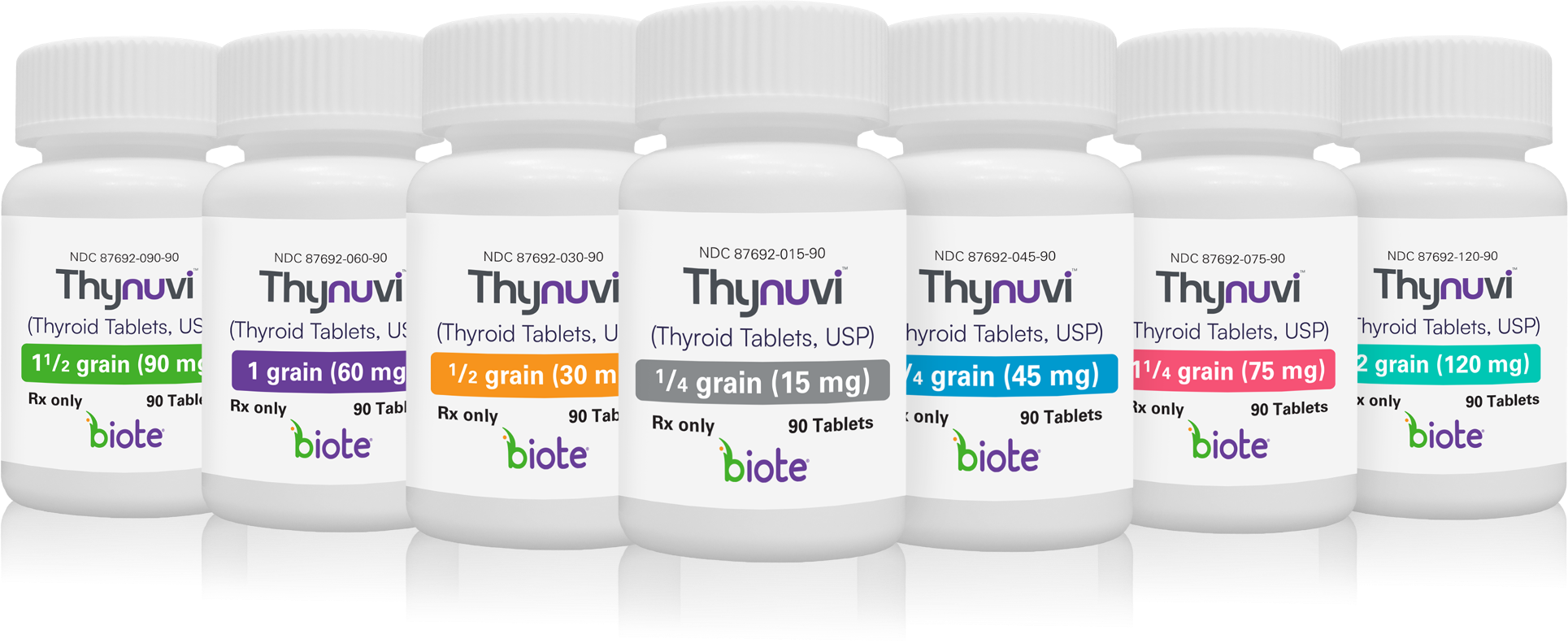
Thynuvi is a prescription natural desiccated thyroid (NDT) medication available in seven strengths to support individualized treatment decisions made between patients and their healthcare providers.

Precise
More dosing options than most NDT products, including 45 mg and 75 mg intermediate strengths for individualized thyroid therapy.

Simple
Contains four inactive ingredients in a thoughtfully simple formulation, made without corn starch, dextrose, mineral oil, lactose, gluten, or artificial colors.

Reliable
Transparent U.S. sourcing and manufacturing, providing visibility into where Thynuvi is made and where its active ingredient is sourced.
UNDERSTANDING HYPOTHYROIDISM
Hypothyroidism is a condition that occurs when the thyroid gland does not make enough thyroid hormones to meet the body’s needs. Because thyroid hormones help regulate how the body uses energy, too little thyroid hormone can cause many body processes to slow down. Healthcare providers diagnose hypothyroidism using blood tests together with a person’s symptoms, medical history, and physical examination.
Symptom Can Vary
People with hypothyroidism may experience symptoms such as fatigue, feeling cold, dry skin, constipation, slowed thinking, mood changes, or changes in weight. These symptoms can have many causes and do not confirm hypothyroidism on their own.
Talk with a Healthcare Provider
If you have new or persistent symptoms, ask a qualified healthcare provider for an evaluation. This website does not provide a diagnosis or individualized medical advice.
Understanding NDT
Natural desiccated thyroid (NDT) is derived from animal thyroid tissue and is used in certain prescription thyroid products. Thyroid products differ in their active hormones, inactive ingredients, strengths, and prescribing considerations. A healthcare provider can explain the available options and determine an appropriate treatment plan.
Indications
Thynuvi Thyroid Tablets USP are indicated as replacement or supplemental therapy in patients with hypothyroidism of any etiology, except transient hypothyroidism during the recovery phase of subacute thyroiditis. This category includes cretinism, myxedema, and ordinary hypothyroidism in patients of any age (children, adults, the elderly), or state (including pregnancy); primary hypothyroidism resulting from functional deficiency, primary atrophy, partial or total absence of thyroid gland, or the effects of surgery, radiation, or drugs, with or without the presence of goiter; and secondary (pituitary), or tertiary (hypothalamic) hypothyroidism.
Thynuvi is also indicated as pituitary TSH suppressants, in the treatment or prevention of various types of euthyroid goiters, including thyroid nodules, subacute or chronic lymphocytic thyroiditis (Hashimoto’s), multinodular goiter, and in the management of thyroid cancer.
Patient Note
Different thyroid medicines are not automatically interchangeable. Do not start, stop, switch, or change your dose without guidance from your healthcare provider.
PRESCRIBING INFORMATION
Seven Strengths for Individualized Prescribing
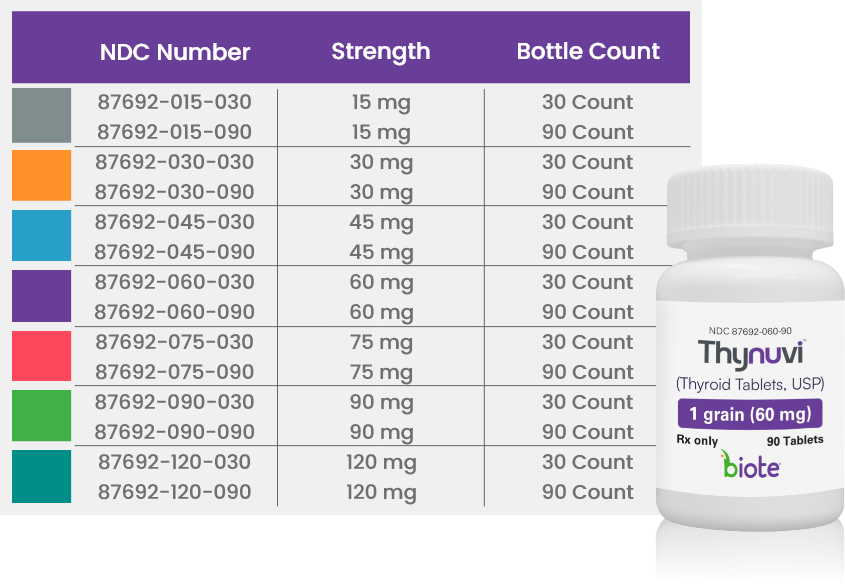
Thynuvi™ is available by prescription only. Thyroid Tablet USP contains natural desiccated thyroid (NDT) derived from porcine thyroid glands. The information on this website is provided for educational purposes only and is not intended as medical advice, diagnosis, or treatment. Thynuvi is not available in all states. Please ask your healthcare provider if Thynuvi is available in your state. Product availability is subject to change. Only a licensed healthcare provider can determine whether Thynuvi™ is appropriate for an individual patient. Always consult your healthcare provider regarding medical conditions or treatment decisions. Healthcare providers are responsible for determining the appropriate treatment and dosing for each individual patient based on their independent clinical judgment. Refer to the current Prescribing Information before prescribing or dispensing. Thynuvi is a trademark of Biote.
DTE products, including Thynuvi, have not been reviewed by FDA for safety or efficacy.
PATIENTS
IMPORTANT SAFETY INFORMATION – Thynuvi (thyroid tablets, USP)
Drugs with thyroid hormone activity, alone or together with other therapeutic agents, have been used for the treatment of obesity. In euthyroid patients, doses within the range of daily hormonal requirements are ineffective for weight reduction. Larger doses may produce serious or even life-threatening manifestations of toxicity, particularly when given in association with sympathomimetic amines such as those used for their anorectic effects.
- Do not use Thynuvi for male or female infertility unless this condition occurs with low thyroid levels.
- Do not use Thynuvi if you have uncorrected adrenal cortical insufficiency, untreated thyrotoxicosis, or apparent hypersensitivity to any component of the product.
- Talk to your doctor if you are elderly or have heart disease. Taking too much Thynuvi may affect your heart. Tell your doctor immediately if you have any signs of increased heart rate, chest pain, or an irregular heartbeat.
- Tell your doctor about any other medical conditions you may have, especially diabetes mellitus, diabetes insipidus, or adrenal cortical insufficiency. The dose of other drugs you may be taking to control these conditions may have to be changed while you are taking Thynuvi.
- If you are taking insulin, oral hypoglycemic agents, or oral anticoagulants your doctor may recommend close monitoring and dosage adjustments.
- In infants, excessive doses of Thynuvi may produce a condition called craniosynostosis (premature closure of the head bones).
- Tell your doctor if you are taking any other products, including prescription drugs and over-the-counter products.
- Tell your doctor if you are breastfeeding.
- Talk to your doctor if you are experiencing chest pain, increased pulse rate, palpitations, excessive sweating, heat intolerance, and nervousness.
- Partial hair loss may occur for children during the first few months of taking Thynuvi.
- It is important to have periodic lab tests and clinical evaluations to assess your treatment response.
Uses:
Thynuvi (Thyroid Tablets, USP) is a prescription medication that is used to replace or supplement thyroid hormones in patients with hypothyroidism from any cause, except transient hypothyroidism during the recovery phase of subacute thyroiditis. Thynuvi is also used to lower a hormone called TSH to treat or prevent certain types of thyroid swelling (goiter), including thyroid nodules, Hashimoto’s thyroiditis, an enlarged thyroid with multiple nodules (multinodular goiter), and as part of managing thyroid cancer.
PROVIDERS
IMPORTANT SAFETY INFORMATION – Thynuvi (thyroid tablets, USP)
Drugs with thyroid hormone activity, alone or together with other therapeutic agents, have been used for the treatment of obesity. In euthyroid patients, doses within the range of daily hormonal requirements are ineffective for weight reduction. Larger doses may produce serious or even life-threatening manifestations of toxicity, particularly when given in association with sympathomimetic amines such as those used for their anorectic effects.
- Thynuvi should not be used for male or female infertility unless this condition occurs with low thyroid levels.
- Thynuvi is contraindicated in patients with uncorrected adrenal cortical insufficiency, untreated thyrotoxicosis, or apparent hypersensitivity to any active or inactive ingredient.
- Use thyroid hormones with great caution in patients with suspected cardiovascular disease, including patients with angina pectoris or the elderly, in whom there is a greater likelihood of occult cardiac disease. In these patients, initiate treatment at a low dose; reduce the dose if cardiovascular disease worsens or angina occurs.
- Thyroid hormone therapy in patients with concomitant diabetes mellitus or diabetes insipidus or adrenal cortical insufficiency aggravates the intensity of their symptoms. Appropriate adjustments of the various therapeutic measures directed at these concomitant endocrine diseases are required. The therapy of myxedema coma requires simultaneous administration of glucocorticoids.
- Patients receiving insulin, oral hypoglycemic agents, or oral anticoagulants may require close monitoring and dosage adjustments. Prothrombin time should be closely monitored in thyroid-treated patients on oral anticoagulants.
- Excessive doses in infants may cause craniosynostosis.
- Biotin may interfere with thyroid laboratory tests and produce erroneous results; patients should discontinue biotin and biotin-containing supplements for at least 2 days before thyroid function testing.
- Separate administration of Thynuvi and cholestyramine or colestipol by 4 to 5 hours.
- Use caution when administering Thynuvi to nursing women.
- Adverse reactions other than manifestations of hyperthyroidism caused by therapeutic overdosage are rare. Signs and symptoms of thyroid hormone toxicity may include chest pain, increased pulse rate, palpitations, excessive sweating, heat intolerance, and nervousness. Partial hair loss may occur in children during the first few months of therapy and is usually temporary.
Uses:
Thynuvi (Thyroid Tablets USP) is used as replacement or supplemental therapy in patients with hypothyroidism of any etiology, except transient hypothyroidism during the recovery phase of subacute thyroiditis. This category includes cretinism, myxedema, and ordinary hypothyroidism in patients of any age (children, adults, the elderly), or state (including pregnancy); primary hypothyroidism resulting from functional deficiency, primary atrophy, partial or total absence of thyroid gland, or the effects of surgery, radiation, or drugs, with or without the presence of goiter; and secondary (pituitary), or tertiary (hypothalamic) hypothyroidism. Thynuvi is also used as a pituitary TSH suppressant, in the treatment or prevention of various types of euthyroid goiters, including thyroid nodules, subacute or chronic lymphocytic thyroiditis (Hashimoto’s), multinodular goiter, and in the management of thyroid cancer.
DTE products, including Thynuvi, have not been reviewed by FDA for safety or efficacy.
Important Safety Information – Thynuvi
Drugs with thyroid hormone activity, alone or together with other therapeutic agents, have been used for the treatment of obesity. In euthyroid patients, doses within the range of daily hormonal requirements are ineffective for weight reduction. Larger doses may produce serious or even life-threatening manifestations of toxicity, particularly when given in association with sympathomimetic amines such as those used for their anorectic effects.